Trump and Zelenskyy’s (Zelensky, Zelenski) Blowup – a background of the Russian Ukrainian history, critical to understanding the absurdity of Trump and Vance’s behavior.
The black and white of Russia and Ukraine
Ukraine, an Ethnic and National Identity
It pains me to need to write this, but as Americans we are lazy at best when it comes to the history and development of our own nation. But when it comes to world history I believe the majority of our population is historically illiterate. They may recognize some of the major events of the past century, but pull out a map and ask them to start naming the modern countries shown, even in just the Northern Hemisphere, and you will be greeted with nervous laughter and the ‘deer in headlights’ look on their faces.
So what is the importance of having an understanding of the historical and complex relationship between Russia and Ukraine? Glad you asked… If you are not at least remotely familiar with the history between these two separate peoples, you will not be able to understand the resolve and defiance the Ukrainian people are projecting and their resistance to the Russian invasion in 2022. So PLEASE, stay with me through this deep dive if you do not have a working knowledge of the very unpleasant history between these two peoples
A crucial point to consider in this discussion is that the Ukrainian people are completely separate ethnically and culturally from the Russian people. This is so important to understand because it goes against the current Russian propaganda that claims Ukraine is historically just a part of Russia, and that ethnically speaking they are the same people. Putin has made these claims repeatedly in his justification for the war which he has waged on Ukraine. He alleges the ‘special military operation’ was simply meant to overturn Ukraine’s government and to bring them once more into the Greater Russia. This goal was never secret. In the three years since the beginning of the war it has been broadcast both internally and externally by Putin’s state run media. Please remember, there is no free broadcast or journalism inside Russia today. Since the beginning of the war in 2022 all stations and journalist who dared to call his invasion what it was, an invasion and a war, have since been shut down, taken over by the state, and the individuals of the press involved imprisoned for 5 to 10 years in most cases (some much more). But truth is the truth regardless of how often a lie is told, as long as there is someone who knows it and is willing to speak it.
Yes, both Russia and Ukraine came from a common ancestor, Kievan Rus which existed from the 9th through the 13th century. After the Mongols conquered Kievan Rus, the area know as Russia today fell under the control of the Mongol Empire. That control continued into until the late 14th and 15th centuries, at which point the Mongols were defeated by the Grand Principality of Moscow, who eventually consolidated the various principalities and lands under one governance. Even at this point the peoples and cultures of Russia and the those of the majority of Ukrainians had been separate for 300 years. Their development into two separate identities was already in progress. Some smaller areas of eastern Ukraine did come under the control of the Mongols and subsequently Moscow. But even these areas would be a thorn in the side of the Moscovians. They developed a unique identity that would later be included as part of the rise of the Cossack. These Cossack would press for their independence and self governance throughout the centuries revolting against both the Lithuanian and Russian rulers alike at different points in history.
After the fall of Kievan Rus, Western Ukraine fell first under Lithuanian and then later Polish rule. In the following centuries these Western Ukrainians saw significant development in thought, religion, and culture far different than the those Ukrainians under the Russian influence. Under Polish and Lithuanian rule, especially after the Union of Lublin in 1569, Ukrainian culture in the west experienced a fusion of influences. Nobility adopted Polish customs and language, integrating Western European Renaissance elements into their lifestyles. Yet the Orthodox Church remained a bastion of Ukrainian tradition for the commoner by preserving language and culture. Meanwhile, the Cossack also emerged in Western Ukraine as defenders of Orthodox culture, blending local traditions with military prowess, which contributed heavily to the very unique identity in Ukrainian territories.
The western lands of Ukraine were eventually absorbed into the Russian Empire during Czarist expansion after a series of wars in the late 1700’s. Under the Czars, Ukrainian life was marked by a complex mix of harsh control and cultural attacks. The empire imposed Russification, suppressing both the Ukrainian language and culture. Serfdom meant peasants faced severe living conditions, working the land without personal freedom. Yet, Ukrainians continued to preserve their identity through folk traditions, the Orthodox Church, and also the Cossack heritage which continued to play a vital role in preserving Ukrainian culture.
Ukraine into the 20th Century
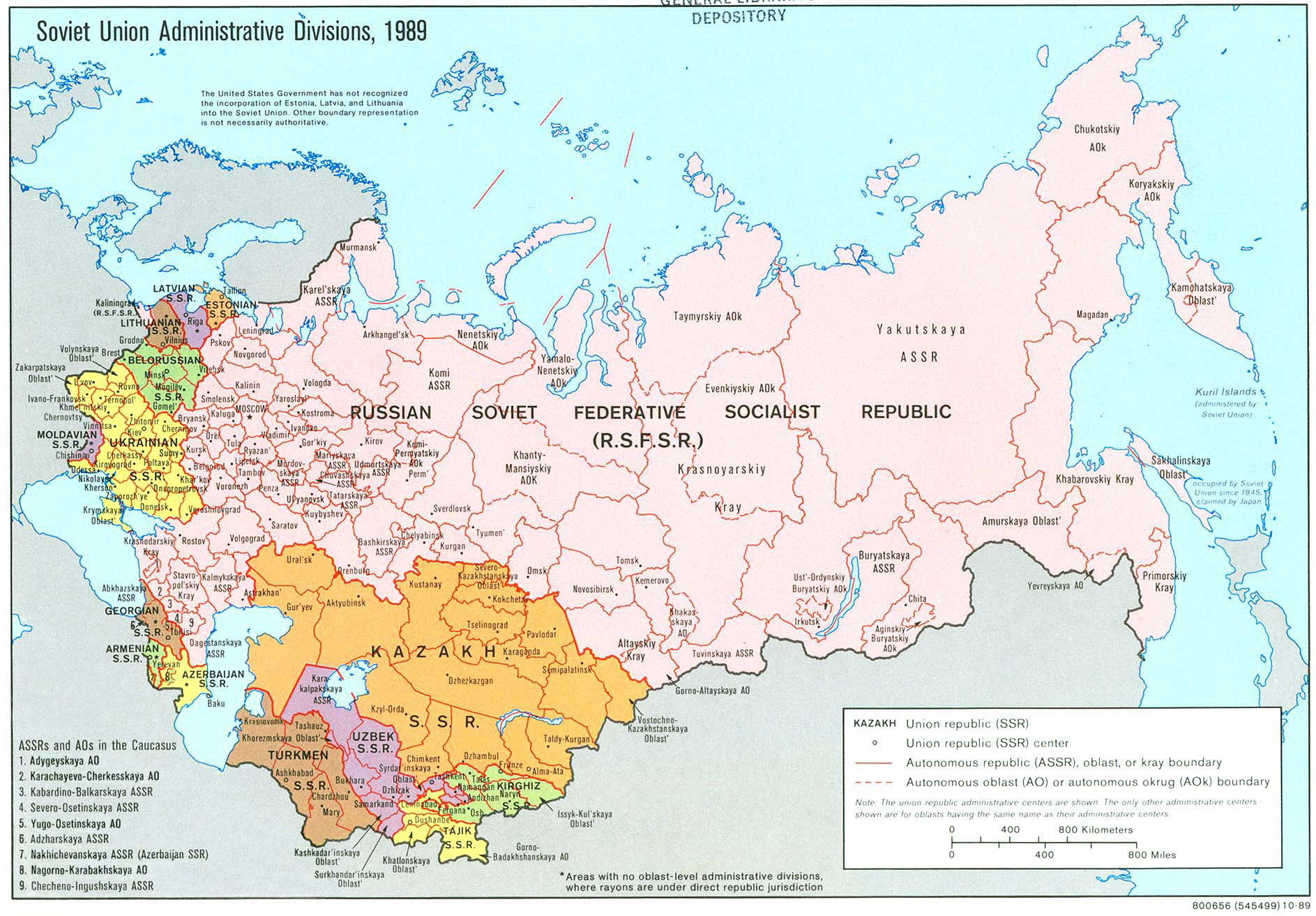
The history of Ukraine and it’s people under the shadow of Russia in the Twentieth century continued to be much the same, both sad but very predictable. The Czars maintained control over Ukraine up to 1917 when the February uprising overthrew the Czarist government. Any hope of a return to a monarchy was dashed later in the October revolution where the communist seized and murdered Czar Nicholas and his entire family. Following in 1918, there began a brief period in which Ukraine claimed it’s independence. This would be completely lost after the events of the Russian Civil War that played out in 1923. During that civil war Ukraine was drawn into the fighting between the communist Red Bolsheviks and the Nationalist Whites. With the final victory of the Bolsheviks, the Reds gained control of the entirety of what had been the Russian Empire ushering in rise of the Soviet Union. At this point Ukraine was absorbed once more under the control of the Russians, now operating under the pretense of the ‘Soviets’. The brutal control of the people of Ukraine by the Russians would now see conditions far worse than they had under the century rule of the Czars.
Ukraine and the Soviet Union
Officially, Ukraine under Soviet rule was considered a Republic. However, the influence of the Central Communist Party overrode any meaningful authority or self-governance in the Ukrainian Republic. The Moscow Soviet (i.e. Moscow, the Central Communist Party Headquarters) influenced both political, economic, and cultural decisions and policies throughout the coming decades. Some examples of the authoritarian and sometimes draconian policies imposed on the Ukrainian people in the 1920’s through the 1930’s included:
- Forced Collectivization
- seizure of farmlands forcing all farmers onto state run and controlled ‘Collectives’
- seizure of Ukrainian grain which was then sold internationally to help fund the industrialization of Soviet Industry. It was also shipped to Russia and other parts of the USSR despite the increasing famine and death that took place in Ukraine from 1932 to 1933, called the Holodomor famine. 3 to 4 million Ukraine died during this period. Let that sink in… that figure represented 10 to 15% of the total Ukrainian population at that time. Farmers found trying to hide grain were executed.
- Moscow established the Ukrainian Soviet, the arm of the communist party in Ukraine, which was under the control of the Central Moscow Soviet. Self rule was in name only. Policies adapted and enforced often went against the very self interest of the Ukrainian people. The primary goals being enforcement of control and obedience to the Moscow Soviet, as well as, a way to repress what Moscow saw as Ukraine’s desire for independence. These policies were an escalation of Russification that was perpetuated under the Czars:
- persecution of Ukrainian writers and intellectuals throughout the ‘great purge’ of Stalin carried out through the 20’s and 30’s. Hundreds of thousands were imprisoned, tortured, exiled to Gulags or executed outright.
- forced adaptation of the Russian Language. This coupled with the severe punishment ranging from imprisonment to execution faced those who dared to teach the Ukrainian language publicly or in schools.
- Ukrainian traditional customs and celebrations were forbidden including festivals, national dances, costume and attire. All forms of public identification with the historic identity of the Ukrainian people were discouraged or banned outright.
Post Soviet Collapse and Formation of the Independent States of Russia and Ukraine
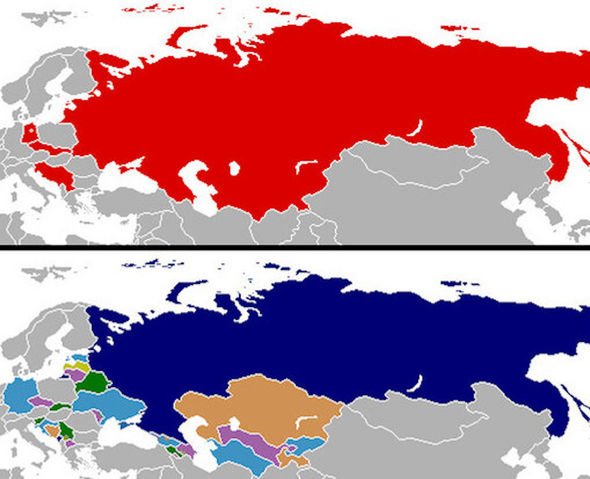
After the fall of the USSR, Russia and the other Soviet Republics began negotiations as to the reality of the future map of the Post-USSR. These negotiations led to the Belavezha Accords. Signed on December 8, 1991, by the leaders of Russia, Ukraine, and Belarus, it declared the dissolution of the Soviet Union and established the Commonwealth of Independent States (CIS), recognizing each other’s independence and territorial sovereignty and the early framework of economic cooperation between the three new nations. The Republic of Georgia though hesitant initially became a member the following year in 1992.
Although there were some challenges the CIS established a relatively open free trade zone was set up to encourage trade and to help the new nations build an economy basically from scratch, with at least the prospect of free trade with those Nations which had seen internal ‘trade’ within the Soviet Union. Differing monetary policies and openness to democratization have provided a number of hurdles over the decades since 1991. Remarkably, even with the tensions of wars started by Russia with both Georgia and Ukraine, the CIS is still in existence today, though obviously with strained relations
The west’s attempts at engagement with the newly formed Russian Republic
Efforts to bring Russia and Ukraine were made by the west to help bring both into the world of free economic trade and democracies. The Partnership and Cooperation Agreement was signed between Europe and Russia in 1994 with aims at both political and economic cooperation between the EU and Russia. This was followed with the acceptance of Russia into the G7 forming the G8, giving Russia a seat as an equal member within the organization of 7 of the largest economies in the free world. This group of nations strives to promote economic stability through cooperation, addressing international crises’, and the adaptation of common policies.
Russia kept their seat in the G8 up to the point they invaded and annexed Crimea in 2014, at which time their membership was suspended. Although this was not the first bump in the road for Russia and its relations to the west. Russia’s geopolitical goals along with corruption seen both from the Russian mafia and Oligarchs gaining sway, hindered it’s ability to integrate in trade with the outside world throughout the 2000’s. Even so foreign investment did begin to flow and trade eventually soared. Unfortunately, this ended up giving a small population access to opulence and wealth into the billions, while the average Russian and the relatively small middle class, increases in the standard of living were made, but not much above the poverty line.
The Mafia’s activity surged after the fall of the USSR due to a weak and disjointed law enforcement agencies, along with many opportunities for organized crime to take advantage due to the chaos in both business and government. The mafia was able to expand it’s illegal operations exponentially in areas like illegal drug trafficking, prostitution, and human trafficking. At the same time many businessmen seized the opportunity to purchase former Soviet industry assets and factories during privatization for pennies on the dollar from the cash starved government. These businessmen were able to purchase the assets often with help from foreign investors who saw the opportunity for quick turn around in value. These businessmen saw fortunes into the billions come back in return as their business became operational and the economy began to recover. They became the oligarchs that would sway both politics and economic policies from the late 1990’s forward.
This world of opulence is the the background for Putin who succeeded Boris Yeltsin, the first Prime Minister of Russia.
Thankfully with the collapse of the USSR Ukraine finally achieved it’s long sought after independence and self-rule. One note that should be made is that in the aftermath of the collapse ALL of the former Republics which were breaking into individual nations signed treaties of recognition between their newly formed states in 1991. This included Russia’s signature recognizing the independent Ukrainian Republic’s sovereignty.
After the collapse Ukraine found themselves in possession of a number of Nuclear weapons and missiles. The voluntarily gave up those missiles on the condition that Russia would sign a treaty laying out once again Russia’s recognition of Ukraine and it’s territory and sovereignty. The Budapest Memorandum on Security Assurances was signed by the US, the UK, Ukraine, and once again, Russia.
But Putin has proven that he does not recognize these agreements, by his actions in annexing and seizing Crimea in 2014, and then with the full scale invasion of Ukraine in 2022.
Trump’s willingness to embrace Putin and Russian Lies
In part III, I will discuss Trump’s meeting with Putin prior to the now infamous oval office interview with Zelensky, along with my thoughts on the interview itself.


 The Informed Citizen